Mesh analysis, or why that matrix is a picture of the circuit
Every entry is a branch you can point at. A diagonal is the sum of the
resistors around one loop; an off-diagonal is minus the resistor two
loops share, negative because the two currents run through it in
opposite directions. Only the loop holding the source gets a voltage,
so V = [16, 0, 0] and the whole circuit
comes down to three numbers.
Written with Manim in
scripts/mesh_analysis.py,
after a reel by MAE Academy;
the circuit and the numbers are theirs, the drawing is not.
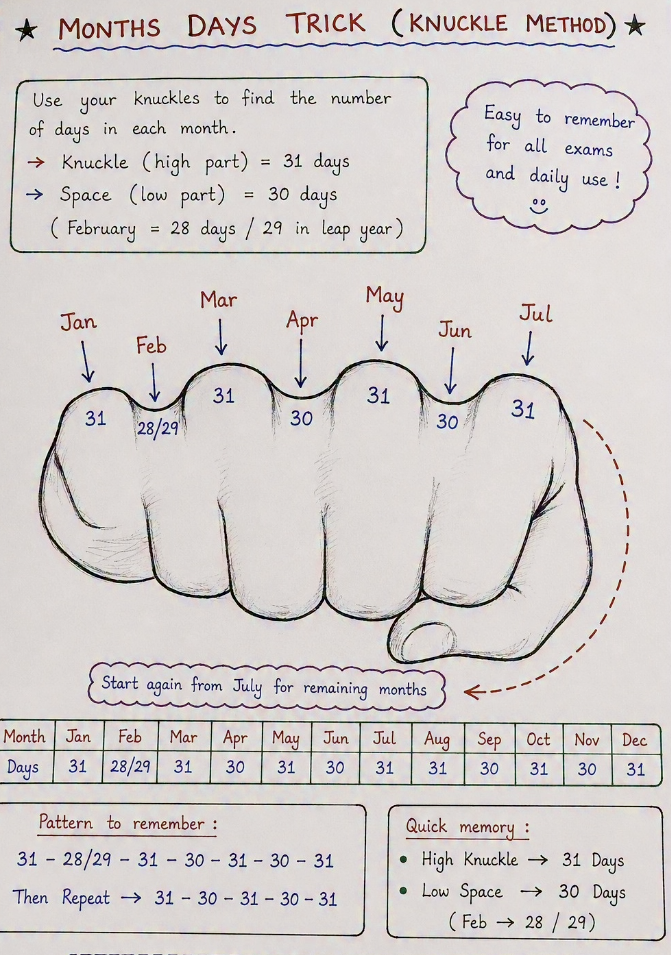
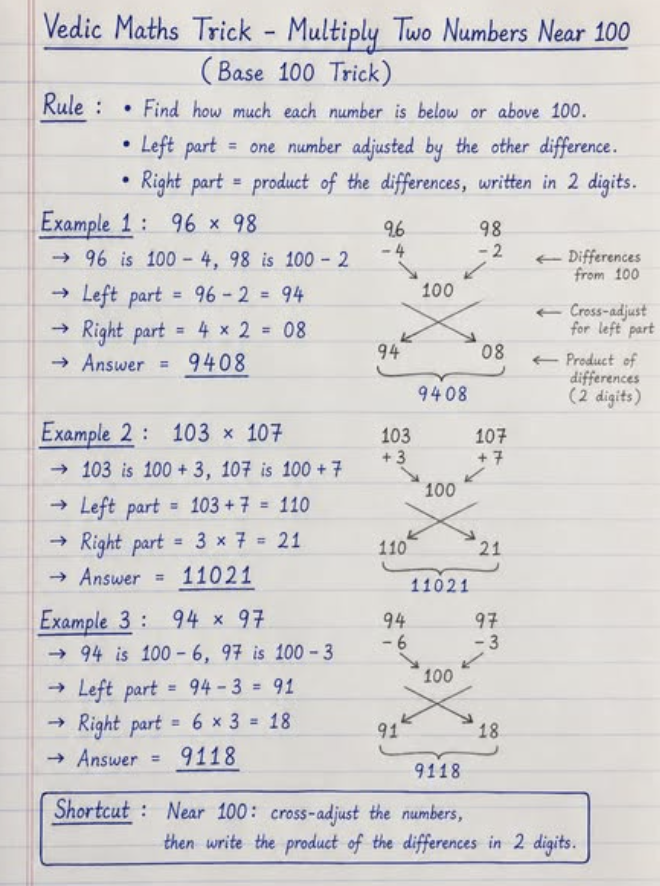
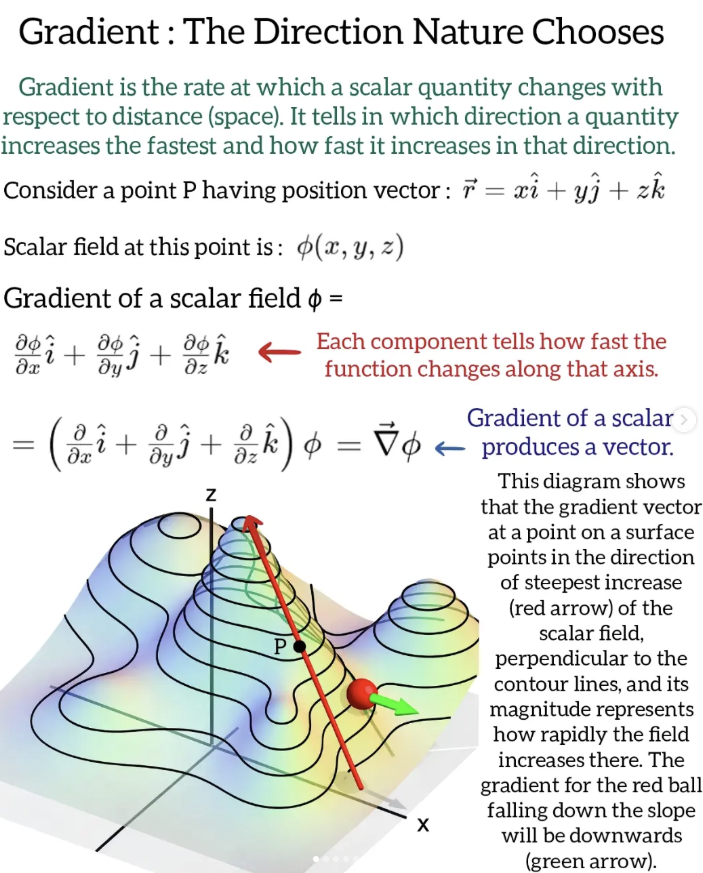
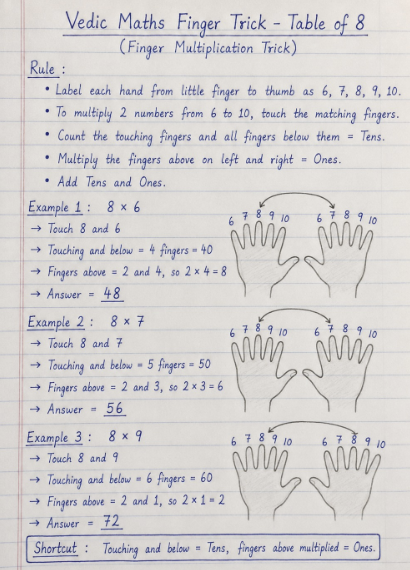
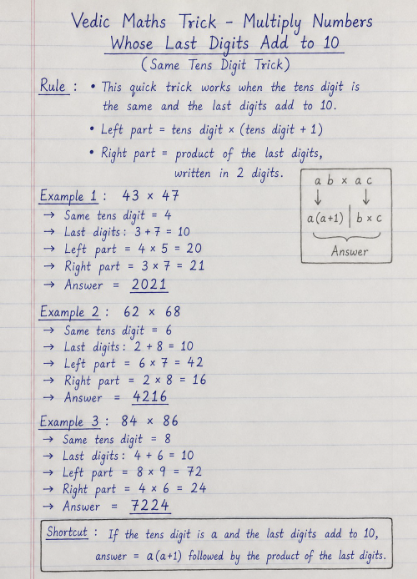
The knuckle method for how many days are in a monthMake a fist and count across the knuckles from January: a knuckle is 31 days, the dip between two is 30. Seven months takes you to July on the last knuckle, so start over at the first one for August and the pattern carries to December. February is the exception and is 28, or 29 in a leap year.Multiplying two numbers near 100, the base-100 trickWrite each number as 100 plus or minus something. The left part is either number cross-adjusted by the other's difference -- 96 - 2, or equally 98 - 4, both 94. The right part is the two differences multiplied, written in two digits: 4 x 2 = 08. So 96 x 98 = 9408, and 103 x 107 = 11021 the same way, carrying the extra digit left when the right part runs over.The gradient of a scalar field, and why it points the way it doesTake the partial derivative of a scalar field along each axis and hang the unit vectors on them, and what falls out is a vector: grad phi. Each component says how fast the field changes along that axis, so the vector as a whole points the way the field climbs fastest -- perpendicular to the contour lines, its length the rate of that climb. Downhill is the same vector with a minus sign, which is the direction anything left alone on the slope actually takes.The eight times table on your fingersNumber both hands from little finger to thumb as 6, 7, 8, 9, 10. To multiply any two of those, touch the two fingers together. The touching fingers and every finger below them are tens; the fingers left above the join on each hand are multiplied together for the ones. So 8 x 7 touches four fingers and below -- fifty -- with 2 and 3 left above, giving 56.Multiplying two numbers with the same tens digit whose last digits add to tenIt works only in that case, and then it is two multiplications. The left part is the tens digit times the next number up: for 43 x 47, that is 4 x 5 = 20. The right part is the last digits multiplied, written in two digits: 3 x 7 = 21. Put them together and 43 x 47 = 2021.